
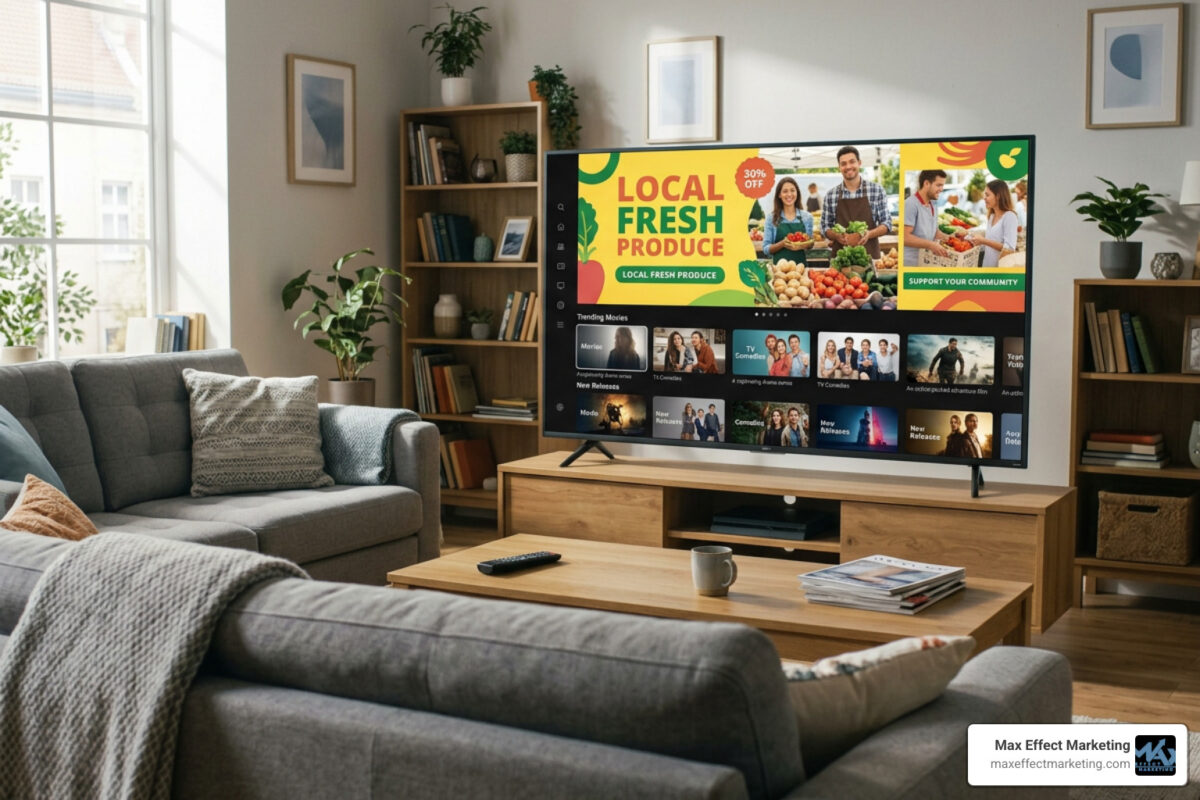
Why Choosing the Right TV Advertisement Services Can Make or Break Your Campaign
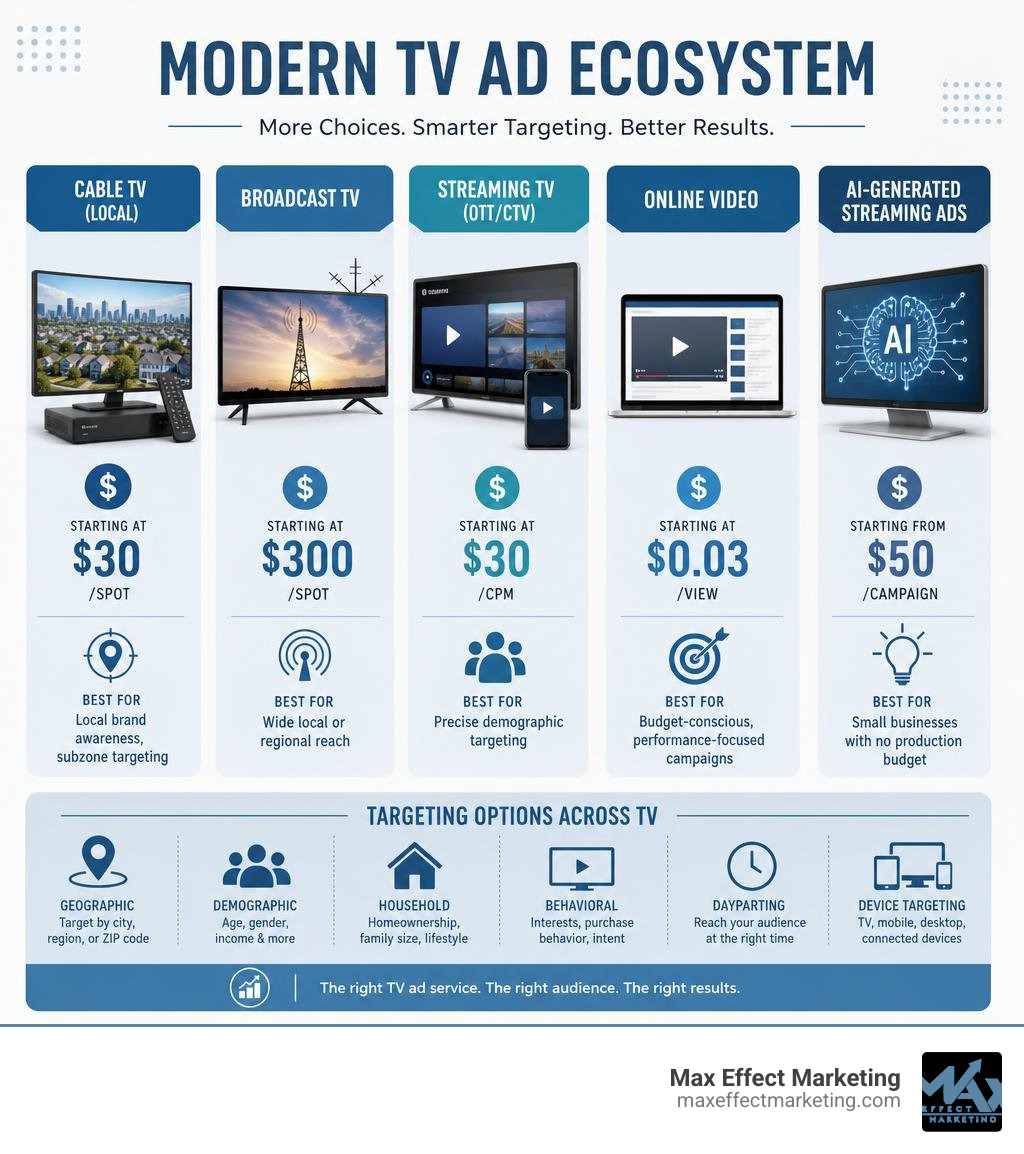
TV advertisement services cover a wide range of options — from traditional cable and broadcast spots to streaming platforms, addressable TV, and AI-powered ad creation tools. If you’re trying to figure out which type is right for your business, here’s a quick breakdown:
| Service Type | Starting Cost | Best For |
|---|---|---|
| Cable TV (local) | ~$30/spot | Local brand awareness, subzone targeting |
| Broadcast TV | ~$300/spot | Wide local or regional reach |
| Streaming TV (OTT/CTV) | ~$30/CPM | Precise demographic targeting |
| Online Video | ~$0.03/view | Budget-conscious, performance-focused campaigns |
| AI-Generated Streaming Ads | From $50/campaign | Small businesses with no production budget |
Television was still in its experimental phase in 1928, yet the medium’s power to sell was already obvious to marketers. Fast-forward to July 2026, and the landscape looks almost unrecognizable.
The average viewer now uses 12 different TV services. Media costs have risen 41%. And 73% of marketers still struggle to prove ROI on their TV campaigns.
That’s not a small problem — it’s a budget crisis hiding in plain sight.
The good news? The tools available to advertisers today are dramatically more precise, affordable, and measurable than anything that existed even five years ago. The challenge is knowing which services, platforms, and strategies are actually worth your budget — and which ones will quietly drain it.
I’m David Bauer, Vice President at Max Effect Marketing, and I’ve spent 14+ years running advertising campaigns across television, streaming, Google, Meta, and beyond — helping businesses stop wasting budget on tv advertisement services that don’t convert. This guide will give you a clear, honest framework for comparing your options, whether you are trying to calculate your potential ott advertising cost, figure out the baseline hulu advertising cost, or explore a more budget-friendly pluto tv advertising cost.
Decoding the Modern TV Advertising Landscape
To make smart choices about where to put your hard-earned dollars, you first need to understand how the television landscape has evolved. It’s no longer just about buying a 30-second spot on prime-time network television and hoping for the best.
Historically, traditional linear TV (broadcast and cable) ruled the airwaves. But the rise of streaming services (connected TV, or CTV) and digital video recorders (DVRs) completely rewrote the rules.
For years, critics predicted that the digital video recorder (DTR/DVR) would be the death of television advertising. After all, if viewers can fast-forward through commercials, why would any brand pay to air them?
However, the data tells a surprisingly different story.
Studies show that once a household gets a DTR, they actually watch 17% more television overall. Furthermore, 82% of viewing in DTR households is still to normal, linear, broadcast TV without fast-forwarding the ads. Even in the 18% of viewing that is time-shifted, viewers still watch 30% of the commercials at normal speed. When you do the math, the extra viewing encouraged by owning a DTR results in viewers watching 2% more ads at normal speed than they did before the DTR was installed.
This resilience proves that television remains an incredibly sticky medium. To learn more about why this format continues to hold consumer attention so effectively, check out A Practical Guide to Advantages of Advertising on Television.
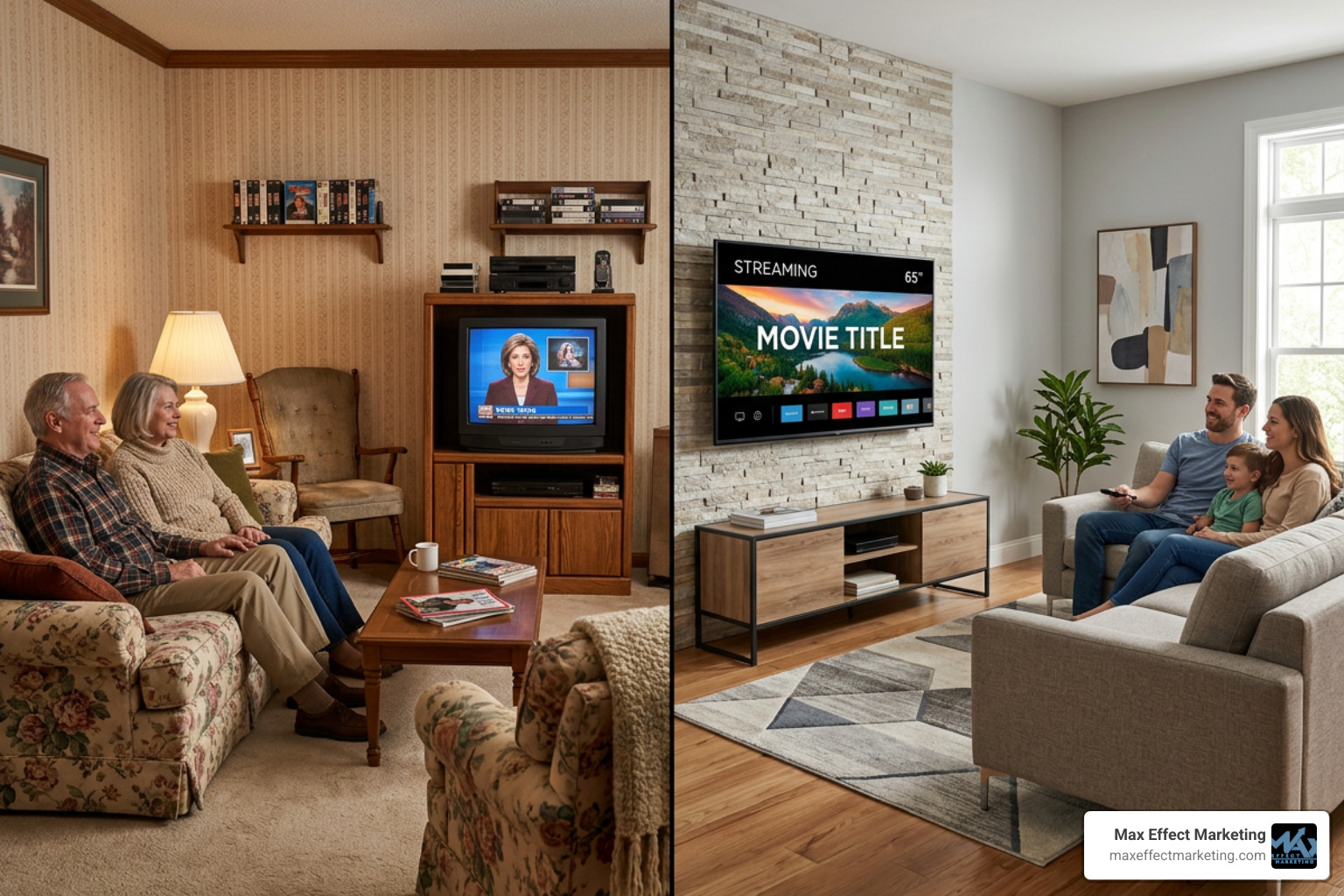
Cable and Broadcast vs. Streaming TV Advertisement Services
When evaluating tv advertisement services, you will generally choose between three primary distribution channels: cable, broadcast, and streaming (also referred to as Over-the-Top or OTT).
- Cable TV: Cable providers segment cities into “subzones” (neighborhood or zip code clusters). This means a local service business can run highly targeted campaigns on premium networks like HGTV or Fox News that only air in specific high-income zip codes. It completely eliminates waste because you aren’t paying to reach viewers who live 50 miles away from your storefront. Local cable packages typically start around $3,000 per month, with individual spots starting as low as $30.
- Broadcast TV: This is your traditional over-the-air television (NBC, CBS, ABC, FOX). It reaches the widest possible regional audience, making it ideal for brands that need massive, broad exposure. However, because it lacks the granular geographic targeting of cable subzones, spots are more expensive, starting around $300 per airing.
- Streaming TV (CTV/OTT): Streaming represents the perfect modern advertising medium by combining the emotional storytelling power of traditional television with digital precision and real-time tracking. Advertisers can target viewers by exact demographics, interests, and online behaviors. Streaming TV ads are bought on a CPM (cost per thousand views) basis, typically averaging around $30 per CPM. To understand how these rates are structured across different platforms, read The Complete Guide to OTT and CTV Ad Rates.
| Channel | Typical Starting Cost | Targeting Precision | Best Used For |
|---|---|---|---|
| Cable (Local Subzones) | $30/spot (Packages from $3,000/mo) | High (Zip Code/Neighborhood) | Local retail, home services, local awareness |
| Broadcast TV | $300/spot (Packages from $10,000/mo) | Low (DMA/Regional) | Mass reach, major events, regional brand building |
| Streaming TV (CTV) | $30 CPM (Campaigns from $50/mo) | Very High (Demographics, Interests, Behavior) | E-commerce, niche audiences, direct-response tracking |
The Anatomy of an Effective TV Commercial Campaign
A successful TV campaign doesn’t happen by accident. It requires a delicate balance of creative storytelling, meticulous media planning, and strategic media buying.
Many businesses fall into the trap of treating media buying and creative production as two completely separate projects. They hire a local videographer to shoot a video and then hand it over to a media buyer.
In reality, these two phases must work in lockstep. Your creative assets must be tailored to the specific platforms where they will live, and your media plan must be optimized to ensure your target audience actually sees the creative. This is why partnering with a full-service agency that handles both production and placement is so critical.
Creative Elements That Drive Brand Recall
What makes a commercial memorable? It isn’t just a high production budget. It’s the psychological triggers built into the creative.
- Humor: When used correctly, humor is an incredibly powerful tool that lowers a viewer’s natural resistance to sales pitches. However, it must be handled carefully. Avoid controversial slogans, double entendres, or sensitive terms that could lead to viewer backlash.
- Animation: Animation is excellent for explaining complex concepts simply, but it also has a practical business benefit: it protects your commercial from changes in fashion that could quickly date a live-action spot, extending the lifespan of your creative asset.
- Music and Jingles: Sound is responsible for a massive portion of brand recall. Think of the battery brand’s bunny mascot that used a simple, catchy rhythm to drive a 15-year parody campaign. Or consider how an athletic shoe brand licensed a famous rock band’s original recording in 1987 to instantly associate positive, nostalgic emotions with their products. (Though, be careful with your music selection — one major cruise line famously used an upbeat song about heroin addiction for its commercial campaigns, proving that you should always read the lyrics first!)
The Production Pipeline for TV Advertisement Services
Producing a professional, broadcast-ready commercial typically takes about 4 to 8 weeks.

Beware of the “free production” trap often offered by local cable stations. Cable networks will frequently offer to produce a commercial for free or at a massive discount if you commit to a long-term media buy (usually a minimum of 13 weeks).
While this sounds like a great deal, these spots are often rushed, low-quality, and look painfully cheap when sandwiched between slick national ads. Remember: in television advertising, you almost always get what you pay for.
To get a realistic understanding of production costs and avoid hidden fees, take a look at our breakdown: Don’t Break the Bank: What It Really Costs to Run a Commercial on TV.
Smart Targeting: Addressable TV and Intent-Based Technology
The holy grail of modern advertising is showing the right ad to the right person at the exact moment they are most likely to buy. Historically, TV was too broad to achieve this. Today, technology has changed the game.
Addressable TV allows advertisers to serve completely different commercials to different households watching the same program simultaneously. If two neighbors are watching the same live football game, one might see an ad for a minivan because they have kids, while the other sees an ad for a luxury sedan because their household data suggests they are in-market for a higher-end vehicle.
This surgical precision is driven by several key technologies:
- ACR (Automatic Content Recognition): This technology is built into many modern smart TVs. It fingerprints audio and video frame IDs in real time to identify exactly what is playing on the screen.
- Dynamic Ad Insertion (DAI): This allows streaming platforms to swap out generic ad slots with personalized, targeted commercials quickly, helping create a seamless viewing experience.
- Cross-Device Intent Signals: Modern TV ad campaigns can connect household-level viewing data with broader digital behavior signals, helping advertisers reach audiences who are more likely to be interested in a specific product or service.
The big takeaway: TV targeting no longer has to feel like tossing a message into the ocean and hoping your best customer happens to be swimming nearby. With the right strategy, your campaign can focus on the households most likely to care, respond, and convert.
Navigating TV Ad Budgets, Regulations, and ROI
One of the biggest misconceptions about TV advertising is that it is only for massive brands with six-figure budgets.
In the modern landscape, small businesses can launch highly effective, localized campaigns without needing a budget that makes the CFO clutch their coffee mug. By utilizing streaming platforms or local cable subzones, you can test TV ads with very manageable budgets.
However, before you launch, you must navigate the regulatory landscape. Unlike digital platforms where you can upload creative quickly, TV networks often require strict clearance. Advertisers need to make sure claims are accurate, substantiated, and appropriate for the audience. For a helpful baseline on truth-in-advertising standards, review the FTC advertising and marketing guidance.
Special extended clearance may be needed if you are advertising sensitive categories like food, medical products, gambling, or alcohol. For example, one beverage brand was forced to retire a popular canine mascot after regulators accused them of using an animal that appealed too strongly to underage viewers.
Furthermore, children’s cognitive development stages affect how ads can be targeted and evaluated. Children under two years old cannot distinguish between programs and commercials, while teenagers up to 13 may still struggle to recognize paid celebrity endorsements. Staying compliant with these standards is critical to avoid immediate viewer backlash, rejected placements, or forced ad withdrawals.
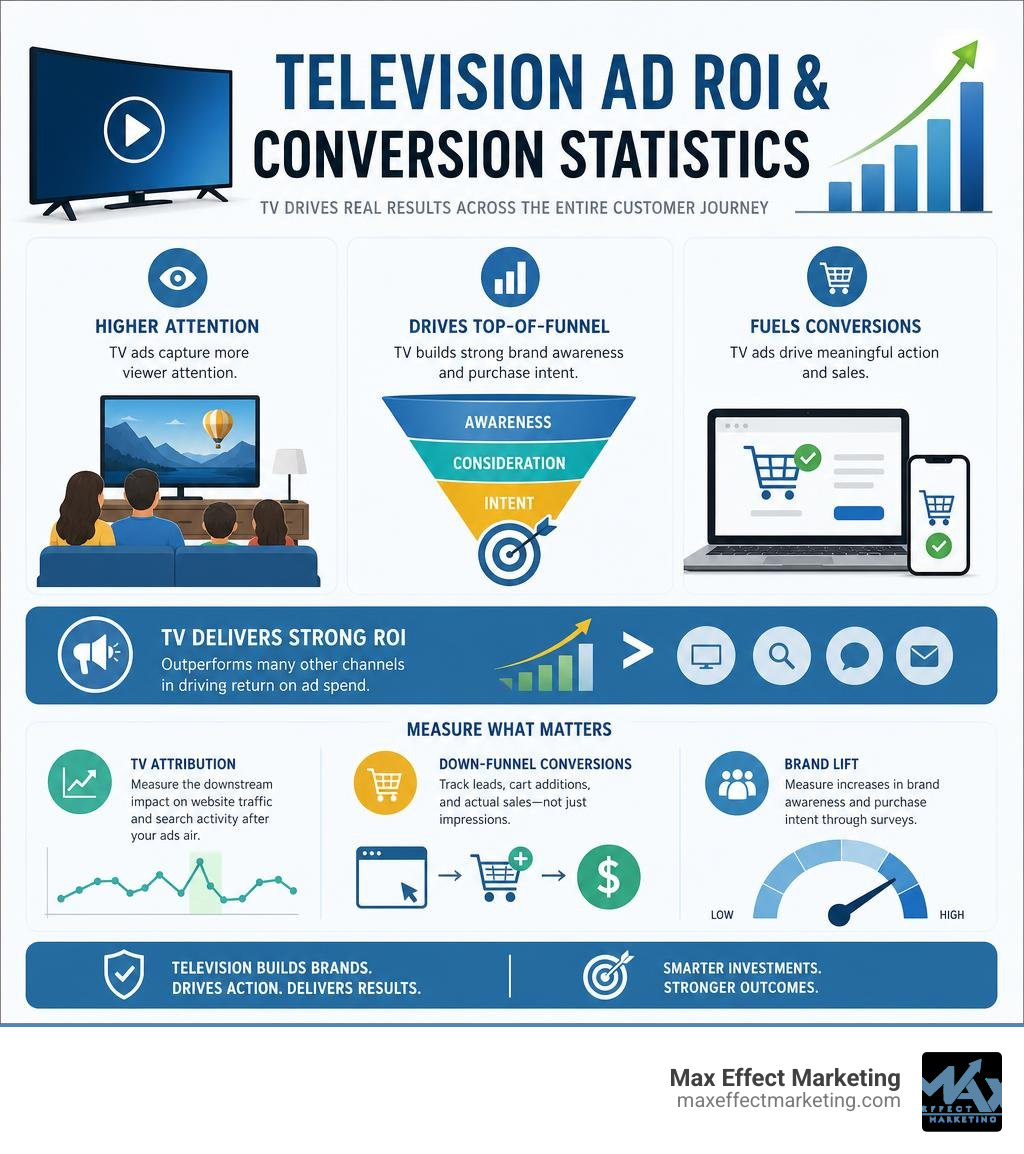
To measure whether your campaign is actually working, you need to look beyond basic “impressions” and track metrics that impact your bottom line:
- TV Attribution: Measuring the direct downstream impact that your television ads have on consumer behavior, such as spikes in website traffic or direct search volume immediately following an ad airing.
- Down-Funnel Conversions: Tracking leads, cart additions, and actual sales rather than just top-of-funnel views.
- Brand Lift: Measuring the increase in local brand awareness and purchase intent through post-campaign consumer surveys.
For a detailed look at how budget planning works on premium, high-impact streaming platforms, read The Ultimate Guide to the Cost of Hulu Ads.
Budget-Friendly Platforms for Cord-Cutters
If you are a small business looking to dip your toes into TV advertising without breaking the bank, streaming platforms built for cord-cutters are the perfect starting point. They offer lower entry barriers, flexible budgeting, and highly engaged audiences.
- YouTube TV: Allows you to reach cord-cutters who are streaming live sports and cable networks. Learn more about pricing and setup in our guide: YouTube TV Ads: What You’ll Pay to Reach Cord Cutters.
- Pluto TV: A fantastic, budget-friendly option that utilizes ad-supported free streaming to reach a massive, highly diverse audience. Read more here: Pluto TV Ads: Reach Cord Cutters on a Budget.
- Prime Video: Puts your brand alongside premium, award-winning content with highly sophisticated Amazon first-party shopper data targeting. Check out Prime Video Ads: Your Brand Alongside Premium Content.
Frequently Asked Questions About TV Advertisement Services
How do TV advertisement services measure campaign ROI?
Modern tv advertisement services use digital attribution modeling to track direct consumer actions. By monitoring real-time spikes in website traffic, online searches, and conversions within a specific window after an ad airs, agencies can tie offline views to online actions. We also set up custom landing pages, promo codes, or on-screen QR codes to track direct responses, while monitoring long-term brand lift through localized consumer surveys.
What are the main regulations and controversies in TV advertising?
TV advertising is heavily regulated to protect consumers. Advertisers must secure network clearance to prove all claims made in their commercials are legally verified. There are strict restrictions on sensitive industries like pharmaceuticals, alcohol, and gambling. Additionally, advertising aimed at children faces tight scrutiny because younger viewers struggle to distinguish between entertainment and paid promotional content.
Can small businesses run local TV ads on a tight budget?
Absolutely. Through cable subzone targeting, small businesses can buy affordable spots that only air in specific neighborhoods or zip codes. Furthermore, streaming ad platforms allow you to set micro-budgets to test your creative before scaling. To see a real-world example of how local, budget-friendly TV commercials can drive immediate physical business, read Convenience Store TV Commercials That Drive Foot Traffic.
Conclusion
The TV advertising landscape has changed dramatically, but its core strength remains the same: nothing builds trust, credibility, and emotional connection quite like the combination of sight, sound, and motion on a television screen.
At Max Effect Marketing, we are an AI-powered digital marketing agency dedicated to helping businesses generate real, trackable revenue through data-driven campaigns. Our unique approach combines intelligent targeting technology with real human partnerships to help our clients achieve an average of 5X ROI.
We take the guesswork out of media planning, creative production, and advanced cross-device targeting so you can stop wasting ad spend and start scaling your business.
Ready to launch a campaign that actually converts? Explore our comprehensive marketing services today, and let’s build something great together.